The Moment that Infinite Jest Broke Me

In my first official Infinite Jest post, I discuss the moment I could finally relate to Hal Incandenza, junior tennis wunderkind and dictionary memorizer extraordinaire. Reader, I wept.

Sandman Re-Blog Issue #15

Into the Night, or, Sandman meets Infinite Jest.

This is default featured post 3 title

Go to Blogger edit html and find these sentences.Now replace these sentences with your own descriptions.

This is default featured post 4 title

Go to Blogger edit html and find these sentences.Now replace these sentences with your own descriptions.

This is default featured post 5 title

Go to Blogger edit html and find these sentences.Now replace these sentences with your own descriptions.

Wednesday, 20 October 2010

Oscarbait 2010: Winter's Bone


Two million dollars was all it took for Debra Granik to make the best film of the year, with superb performances from its young leads, and no sacrifice of atmosphere. Jennifer Lawrence stars in this tale of survival in the land of Ozark hillbillies, where the family trade is crystal meth and livestock are the only currency.

Like Precious and Fish Tank, the story revolves around the desperation of one young girl facing a life of extreme poverty and deprivation. But Ree is a different animal; she's tough and she's hopeful, even faced with the knowledge that she might lose her only home thanks to her father's jumping bail. And so she is forced on her own Odyssean quest, facing temptations and threats at every pitstop on the way to the truth.

Winter's Bone has moments of unspeakable violence, proving that sometimes the most dangerous people around you are your own blood. And no one lets Ree down more than her kin, from her bail-jumper dad to her mentally unstable mother. But they're not half as terrifying as Ree's motley crew of 'cousins,' who we meet one-by-one, each with their own brand of domestic abuse, silent recriminations, or open threats.

Without such a compelling heroine, the film might have become unrelentingly bleak, but thankfully we have Ree Dolly to root for. Jennifer Lawrence has already been snapped up by Hollywood, with a lead roles coming up in the new X-Men film. Hopefully, Winter's Bone is just at the beginning of its award run, with the Sundance prize already in the bag.

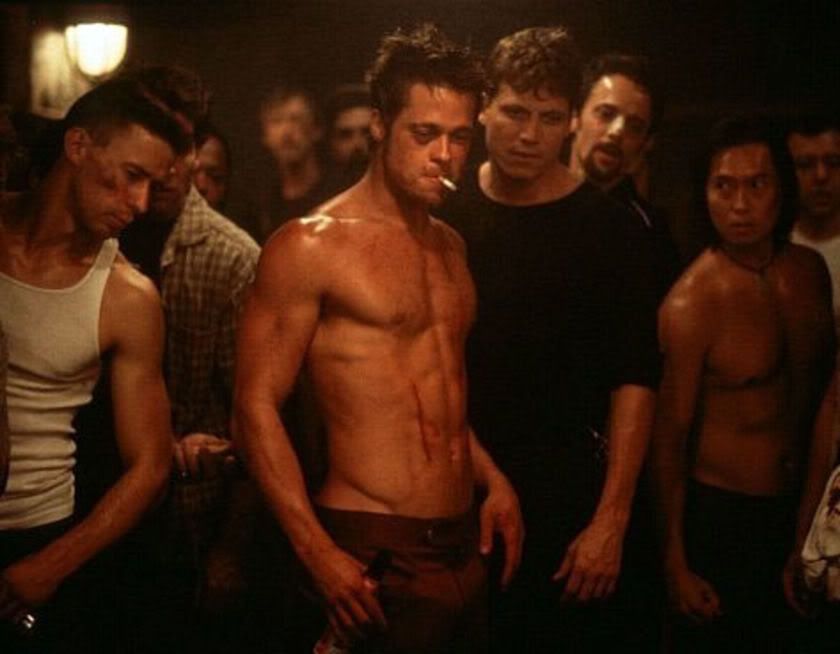
Criminally Overrated: Fight Club


In one sentence: misogynistic twaddle.

Now let me say straight up, I am not one who puritanically hates violence in entertainment; a hallmark of a great film is violence used effectively in the service of character, comedy or horror. I DO have a problem with 'men can only take back their masculinity from evil modern women's equality by BEATING THE CRAP OUT OF EACH OTHER.' It feeds into this whole bullshit theory (that feminists are equally guilty of defending) that men have an innate NEED for violence, that their manhood is inherently tied up with brutality.

That said, I have a general disdain for any story that has a main theme of 'men being emasculated.' Again, the whole concept means there is a clearly defined version of what being a male means, and a feeling of emasculation usually reflects some form of misogny. This misogyny is further reflected by the fact that while the movie tells of the man-destroying feminization of the world, there is only one female character, and that female character is a balls-out male fantasy, ill equipped to challenge the movie's main point (though at least she doesn't confirm it).

This sort of surface deep analysis of social issues is rampant in the film. Now that we've got wussification of men out of the way, lets attack consumerism! In the stupidest, most idiotic, 'I wanna be a Red Army Faction Black Shirt but without any political ideology' kind of way. Back-fat soap is the instrument of horror, but like everything else in this movie, it's cheap and shallow.

Fight Club also commits the ultimate crime in fiction of any form; the illegitimate twist ending. An ending that completely removes the validity of the entire world the audience has been subjected to, an ending that exists only because the writer cannot be bothered to come up with something better.

WOMAN ON THE AGORA
I thought I was alone in hating this movie, but here are some of my more legitimate (employed!) brethren on the film:

Roger Ebert (Chicago Sun-Times): "Fight Club" is the most frankly and cheerfully fascist big-star movie since "Death Wish," a celebration of violence in which the heroes write themselves a license to drink, smoke, screw and beat one another up."

Peter Bradshaw (The Guardian): "But, by the end, it has unravelled catastrophically into a strident, shallow, pretentious bore with a "twist" ending that doesn't work. And it is a film which smugly flirts, oh-so-very-controversially, with some of the intellectual and cultural paraphernalia of fascism - but does not have anything like the nerve, still less the cerebral equipment, to back this pose up."

And my personal favorite, by Lisa Schwarzbaum (Entertainment Weekly): "The giant international furnishings chain IKEA is responsible for many consumer-based phenomena, among them our docile acceptance of cheap, hinged desk lamps that droop like spent lilies. But I hadn't realized that overexposure to IKEA results in limp penises, too, until I saw Fight Club. David Fincher's dumb and brutal shock show of a movie floats the winky, idiotic premise that a modern-day onslaught of girly pop-cultural destinations (including but not limited to IKEA, support groups, and the whole Starbucks-Gap-khakis brand-name axis) has resulted in a generation of spongy young men unable to express themselves as fully erect males. And that the swiftest remedy for the malaise lies in freely and mutually beating the crap out of each other -- bleeding, oozing, cracking, and groaning until pulped bodies crumple to the floor in a poetically lit heap."

Tuesday, 19 October 2010

Before They Were Stars: Oscar Nominated Actors Who Were In the Buffyverse


Hello all, today's special feature is about Buffyverse actors who have gone on (against all odds in some cases) to be recognized by the Academy for their professional excellence (which was resolutely NOT on display back in ye early days.)

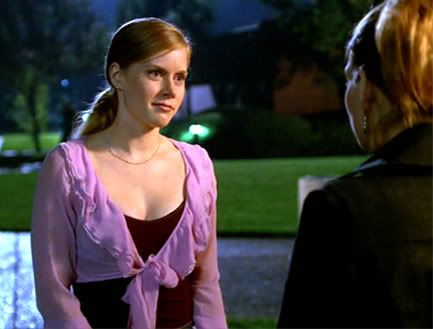
First on our menu is Amy Adams, who had the misfortune of being related to Tara, the most annoying character to ever hit Buffy (though there is much competition). You can see that Amy Adams perkiness on display already.
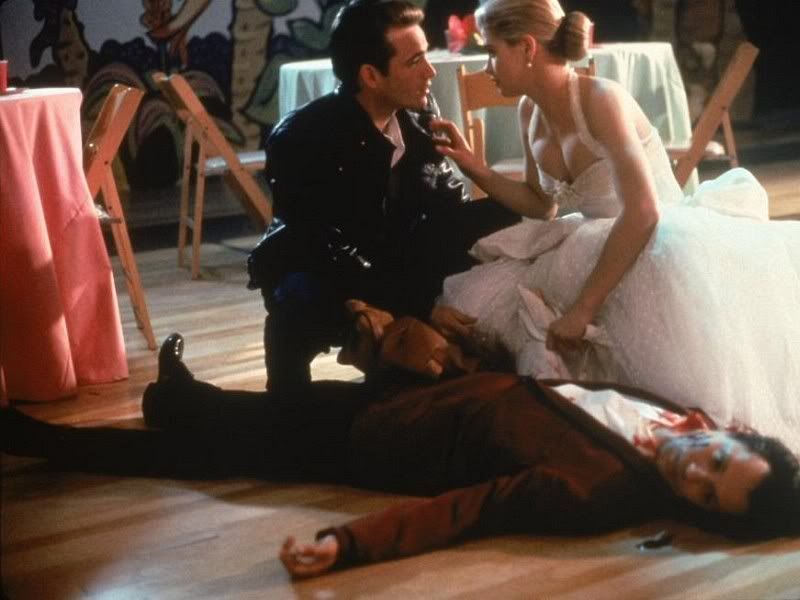
Then, of course, we have Ben Affleck, in another of his many pointless roles as a bullying high school jock in the original Buffy movie. He DEFINITELY goes on to bigger things (including, but not limited to, J.Lo).


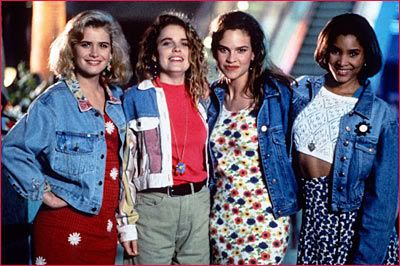
See the third one from the left? There's a multi-Oscar winner on the table! Back in the day, Hilary Swank played the Cordelia equivalent in the Buffy movie.


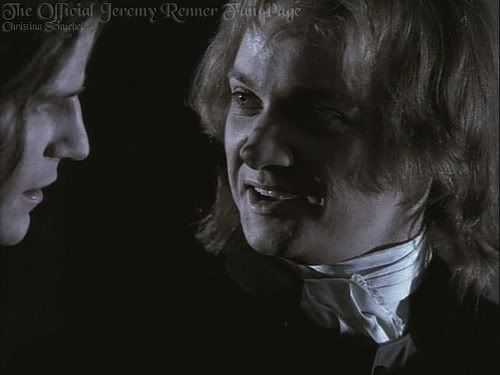
Finally, recognize that guy? He was trapped in a bad Irish accent contest with David Boreanaz in an early episode of Angel. That's Jeremy Renner, star of the Hurt Locker, playing a vampire that Angelus mentored in the ways of evil. The episode is one of the better season one episodes, actually contributing to the overall mythology, and ending with a lovely scene between Angel and Cordelia.

I need a better name for this series than Before They Were Stars. Ideas appreciated.

Tried and Failed: La Dolce Vita


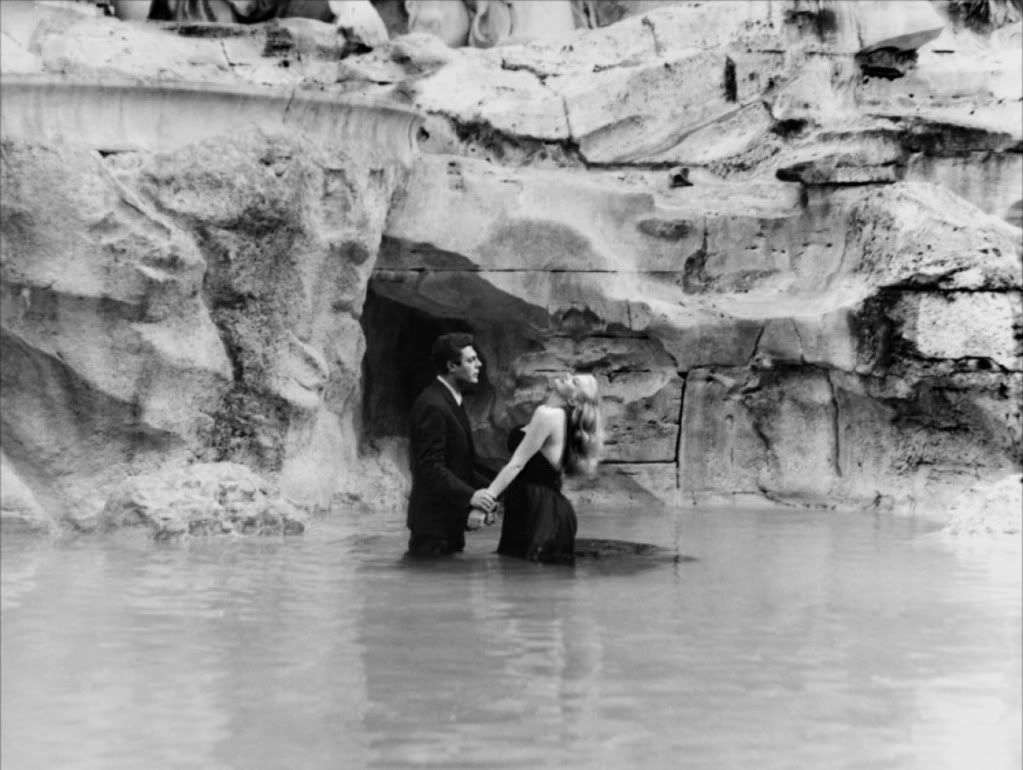
Welcome to Tried and Failed, about those movies you've tried to watch on multiple occasions but never made it all the way through. Our inaugural post is the movie that inspired the whole series: La Dolce Vita, considered one of the all-time greats, and a Fellini masterpiece.

I confess, I still have yet to see a Fellini film, and that's probably because this one bores me so thoroughly everytime I try to watch it. I know it's meant to be one of the most beautiful films ever created, I know it invented the word paparazzo, I know I am an utter, utter failure as a film buff, but I've given it five tries, and have never made it past the first 30 minutes.

Marcello Mastroianni plays a skirt-chasing man about town, leaping from woman to woman without the joie de vivre that can make womanizing compelling to watch on screen (See Don Draper). One of his more famous pickup lines: "You are the first woman on the first day of creation. You are mother, sister, lover, friend, angel, devil, earth, home."

Horrible.

Marcello is pretentious and transparent, and thinks very highly of himself while we are given no indication why. Maybe this changes later in the movie, but I don't really care. La Dolce Vita is forever landed on the reject pile.

Tuesday, 12 October 2010

The Girl Who Played With Hornets


Ah, Stieg Larsson, thank you for contributing to an 8 hour episode of Law and Order: SVU, where shocking revelations trump character but you can't wait for the villains to get their comeuppance.

I'm writing about the second two movies as one because they tell two sides of the same story: who is out to frame Lisbeth Salander, and why. And just like Law and Order, the first half (in this case The Girl Who Played With Fire) shows the gripping detective work, the ethically questionable shortcuts, the discovery of the facts. The second half (The Girl Who Kicked the Hornet's Nest) is framed by Lisbeth's trial, and the race against time to get Millenium published and to find the necessary evidence to prove Lisbeth's innocence.

THE REAL HEADSCRATCHERS
I really did enjoy the film, so while I had a LOT of issues, the whole fit together so well that some of the sillier elements didn't impact my overall enjoyment. But still.

First of all, my GOD was there a paper trail. There were an astonishing number of scenes with Blomkvist walking into a room and throwing a file on the table and proclaiming the finding of new evidence. Perhaps they were printouts of online finds, but entire scenes were devoted to masked motorcyclists stealing papers. If there were electronic originals, that's a bit silly and pointless right?

Secondly, when Blomkvist is hiding in Lisbeth's apartment, the evil masterminds apparently don't know where he's staying. And yet there are scenes where it's shown that they have him followed constantly. Quoi?

Third, Niedermann of the analgesia? I have one word for you: Jaws. He was such a typical James Bond proto-villain, with no real motivation or character of his own, built like a brick wall, murdering people completely at random (and often in really silly ways).

Which brings me to the fight scenes. Some of Niedermann's fight scenes were worse than the greatest excesses of Bollywood. The only thing that was missing was DISHOOM.

HEADSCRATCHERS BUT I DON'T MIND
Love that Lisbeth's idea of 'properly dressing up for court' is to wear a mohawk and chains. Though really I imagine that puts you into contempt in pretty much any court.

OVERALL
Ultimately though, despite any number of flaws, I am prepossessed to love any movie that shows the villainy of 'Men Who Hate Women' and then destroys them.

But I have to admit, while the movies were suspenseful and dramatic, there was a thought in the back of my head that, with the exception of Lisbeth herself, most of the characters were quite impotent in their game of cat-and-mouse. Most of the head honchos of the secret Section were physically disabled (which didn't make them any less scary), which basically meant you had a number of scenes of talking heads in their various lairs. Blomkvist couldn't do anything without the help of the government in the end, and their protection. He was demonstrated as unable to protect himself or his colleagues.

But this is why Lisbeth comes off as such a powerful character, and why we are constantly impressed by her, and are 100% rooting for her even when she does things we would never condone.

Saturday, 9 October 2010

Filling the Gaps: "Greed is good", Wall Street


WHY I HADN'T SEEN IT
While it has one of the most recognizable quotes ("Greed is good.") and one of the most famous villains (Michael Douglas in an Academy Award-winning performance as Gordon Gekko), I was under the impression the movie itself wasn't that great. It seems like a lot of people who reviewed the movie back when it came out complained about the 'liberal moralizing,' but those same critics now hold Gekko's attitude and behavior as a harbinger of our Great Recession. And really, it tells of financial manipulation that only increased through the 1990s and today (see Soros's breaking of the Sterling, for instance).

THE MOVIE
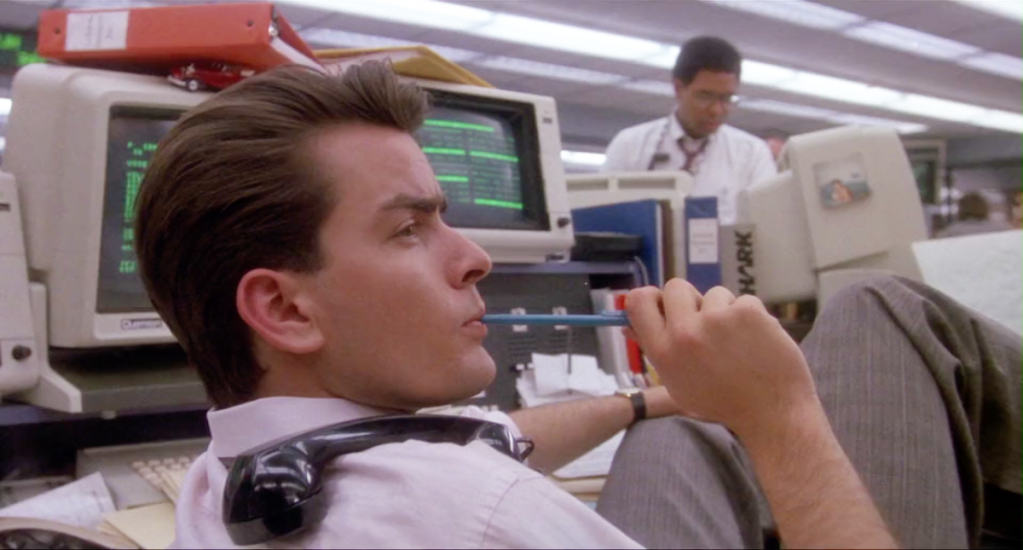
Wall Street, in its broadest sense, tells the story of desperately bored Bud Fox (Charlie Sheen), longing to get ahead in his career and easily seduced into a less than reputable lifestyle by financial shark Gordon Gekko. Throughout his descent and subsequent redemption, he vacillates between the angels on his shoulder. His father (Martin Sheen), a hardworking union man, and Bud's boss try to keep Bud on a moral line, where there are no shortcuts to financial success. Gekko, however, sucks Bud in with a life of easy money, women and prestige, in exchange for what seemed like a minor trade-in of principle.

In the first few shots of the film, we meet Bud Fox getting onto a crowded elevator; he can already be seen as the slickest, oiliest looking person in the shot, hinting at his future corruption. Like Vito Corleone, he's not that "good" at the start, he just hasn't had the opportunity to sell his soul as yet. However, I had issues with Charlie Sheen's acting. Most of the time it was fine, but there were times when he seemed to predict Christian Bale's manic energy in American Psycho, which fit into the style of that movie, but definitely was jarring here. The best scenes were with his father, when he didn't seem to emit an air of complete disconnect with the world around him.

We hear about Gekko before we see him; he's an unapproachable pillar of the community that Bud had to call 59 days in a row before earning a 5 minute hearing. He certainly has a strong force of personality, but as I mentioned, Bud was never incorruptible, so Gekko doesn't have to drive too hard at him. But Gekko drives too hard anyway, and that's how he loses Bud. There were instances when I thought Gekko is really not the criminal mastermind that he fancies himself to be.

Side note: what is up with Daryl Hannah? She really does ruin everything she's in (except Bladerunner and Kill Bill). Seriously, no dramatic roles for her. And her RIDICULOUS outfits.

OVERALL
Side note: Am I the first person to notice that for whatever reason, it's a bunch of women leaving the auditorium when Gekko begins his iconic speech?

Wall Street provides strong insight into the mentality of a certain type of financial professional - the ones that pursue money, more money, at no cost. While a lot of the chicanery used in this film died when the internet came along, it's not difficult to imagine this sort of manipulation is still going on, just harder to trace.

The story was suspenseful and gripping, but I wonder how much of it is incomprehensible to those that don't follow or understand the stock market (judging by the media, lots)

I'll leave you with the most telling exchange in the film, between Bud and Darian during an intimate moment on the beach:

Bud: "Well, what do you want?"
Darian: "A genuine Turner. World peace. The best of everything."
Bud: "Why stop at that?"
Darian: "I don't."

Thursday, 7 October 2010

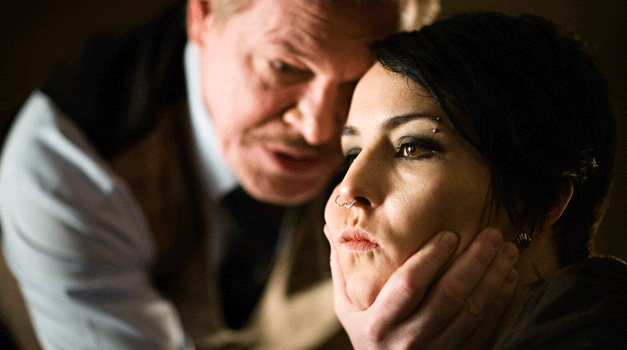
"The Girl With the Dragon Tattoo"


My colleague Julikinsbooks just wrapped up a few posts on the Millenium Trilogy and recommended that I write about the film. Now, since I am apparently the only person in the world who has yet to read The Millenium Trilogy, I honestly did not know what to expect. All I knew at the time was that:

-The lead character is a fearsome feminist badass
-Stieg Larsson is a mystery writing feminist badass

Overall, it was a better-than average thriller, but I still felt like it played pretty much by the numbers. Michael Nyquist was capable and charming in his grizzled investigative journalist role, and acts pretty much as you'd expect a grizzled journalist to behave.  Noomi Rapace is fantastic, she steals every scene she's in as the moody and unpredictable Lisbeth Salander.

But while having a superb cast is usually a boon for movies, in this case it highlights the central problem. It has two characters who could easily be the focus of the story, and tries to have it both ways by telling  two separate stories for the first half of the movie. By the time they come together, the story felt a bit disjointed. And the second half is paced and plotted like a typical action-thriller-mystery.

Perhaps I'm being too harsh. In truth, almost every scene is excellent, it's just that their coming together didn't really work for me. Blomqvist's initial investigation scenes take full advantage of remote, snowy Swedish locales, threatening and isolated. Salander's scenes with her "guardian" are loaded with menace, and she turns the tables in a most violent and unpredictable way.

I think though, fundamentally, the movie's a bit too fantastic. Salander's revenge is the ultimate in rape-revenge fantasies. The idea that Lisbeth would be so attracted to a man 3 times her age is a dirty-old-man fantasy (he is good-looking, but he's EXTREMELY square compared to Salander, and the movie fails to really show them build their relationship apart from solving the case).

Nonetheless, I will see the second movie, and am looking forward to the American remake (Daniel Craig fits the bill perfectly, though again we're going to have the two strong and separated leads problem).

Share

Twitter Delicious Facebook Digg Stumbleupon Favorites